
Product Description
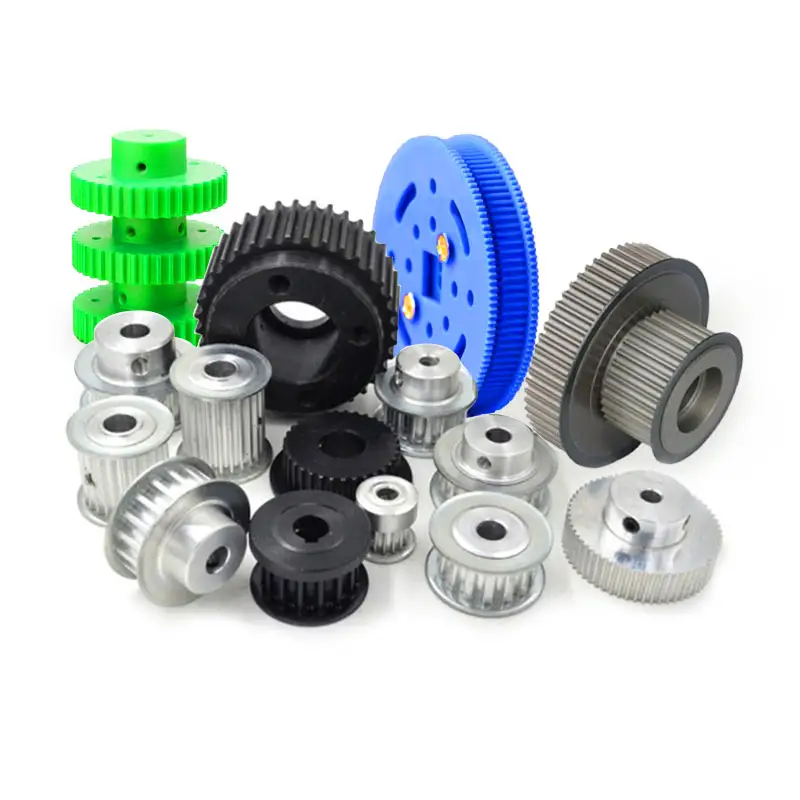
CHINAMFG Machinery offers a wide range of high quality Timing Belt Pulleys and Toothed Bars / Timing Bars. Standard and non-standard pulleys according to drawings are available.
Types of material:
1. AlCuMgPb 6061 6082 Aluminum Timing Pulley
2. C45E 1045 S45C Carbon Steel Timing Pulley
3. GG25 HT250 Cast Iron Timing Pulley
4. SUS303 SUS304 AISI431 Stainless Steel Timing Pulley
5. Other material on demand, such as cooper, bronze and plastic
Types of surface treatment
1. Anodized surface -Aluminum Pulleys
2. Hard anodized surface — Aluminum Pulleys
3. Black Oxidized surface — Steel Pulleys
4. Zinc plated surface — Steel Pulleys
5. Chromate surface — Steel Pulleys; Cast Iron Pulleys
6. Nickel plated surface –Steel Pulleys; Cast Iron Pulleys
Types of teeth profile
| Teeth Profile | Pitch |
| HTD | 3M,5M,8M,14M,20M |
| AT | AT5,AT10,AT20 |
| T | T2.5,T5,T10 |
| MXL | 0.08″(2.032MM) |
| XL | 1/5″(5.08MM) |
| L | 3/8″(9.525MM) |
| H | 1/2″(12.7MM) |
| XH | 7/8″(22.225MM) |
| XXH | 1 1/4″(31.75MM) |
| STS STPD | S2M,S3M,S4.5M,S5M,S8M,S14M |
| RPP | RPP5M,RPP8M,RPP14M,RPP20M |
| PGGT | PGGT 2GT, 3GT and 5GT |
| PCGT | GT8M,GT14M |
Types of pitches and sizes
Imperial Inch Timing Belt Pulley,
1. Pilot Bore MXL571 for 6.35mm timing belt; teeth number from 16 to 72;
2. Pilot Bore XL037 for 9.53mm timing belt; teeth number from 10 to 72;
3. Pilot Bore, Taper Bore L050 for 12.7mm timing belt; teeth number from 10 to 120;
4. Pilot Bore, Taper Bore L075 for 19.05mm timing belt; teeth number from 10 to 120;
5. Pilot Bore, Taper Bore L100 for 25.4mm timing belt; teeth number from 10 to 120;
6. Pilot Bore, Taper Bore H075 for 19.05mm timing belt; teeth number from 14 to 50;
7. Pilot Bore, Taper Bore H100 for 25.4mm timing belt; teeth number from 14 to 156;
8. Pilot Bore, Taper Bore H150 for 38.1mm timing belt; teeth number from 14 to 156;
9. Pilot Bore, Taper Bore H200 for 50.8mm timing belt; teeth number from 14 to 156;
10. Pilot Bore, Taper Bore H300 for 76.2mm timing belt; teeth number from 14 to 156;
11. Taper Bore XH200 for 50.8mm timing belt; teeth number from 18 to 120;
12. Taper Bore XH300 for 76.2mm timing belt; teeth number from 18 to 120;
13. Taper Bore XH400 for 101.6mm timing belt; teeth number from 18 to 120;
Metric Timing Belt Pulley T and AT
1. Pilot Bore T2.5-16 for 6mm timing belt; teeth number from 12 to 60;
2. Pilot Bore T5-21 for 10mm timing belt; teeth number from 10 to 60;
3. Pilot Bore T5-27 for 16mm timing belt; teeth number from 10 to 60;
4. Pilot Bore T5-36 for 25mm timing belt; teeth number from 10 to 60;
5. Pilot Bore T10-31 for 16mm timing belt; teeth number from 12 to 60;
6. Pilot Bore T10-40 for 25mm timing belt; teeth number from 12 to 60;
7. Pilot Bore T10-47 for 32mm timing belt; teeth number from 18 to 60;
8. Pilot Bore T10-66 for 50mm timing belt; teeth number from 18 to 60;
9. Pilot Bore AT5-21 for 10mm timing belt; teeth number from 12 to 60;
10. Pilot Bore AT5-27 for 16mm timing belt; teeth number from 12 to 60;
11. Pilot Bore AT5-36 for 25mm timing belt; teeth number from 12 to 60;
12. Pilot Bore AT10-31 for 16mm timing belt; teeth number from 15 to 60;
13. Pilot Bore AT10-40 for 25mm timing belt; teeth number from 15 to 60;
14. Pilot Bore AT10-47 for 32mm timing belt; teeth number from 18 to 60;
15. Pilot Bore AT10-66 for 50mm timing belt; teeth number from 18 to 60;
Metric Timing Belt Pulley HTD3M, 5M, 8M, 14M
1. HTD3M-06; 3M-09; 3M-15; teeth number from 10 to 72;
2. HTD5M-09; 5M-15; 5M-25; teeth number from 12 to 72;
3. HTD8M-20; 8M-30; 8M-50; 8M-85 teeth number from 22 to 192;
4. HTD14M-40; 14M-55; 14M-85; 14M-115; 14M-170; teeth number from 28-216;
5. Taper Bore HTD5M-15; 8M-20; 8M-30; 8M-50; 8M-85; 14M-40; 14M-55; 14M-85;
14M-115; 14M-170
Metric Timing Belt Pulleys for Poly Chain GT2 Belts
1. PCGT8M-12; PCGT8M-21; PCGT8M-36; PCGT8M-62;
2. PCGT14M-20; PCGT14M-37; PCGT14M-68; PCGT14M-90; PCGT14M-125;
Power Grip CHINAMFG Tooth/ PGGT 2GT, 3GT and 5GT
1. 2GT-06, 2GT-09 for timing belt width 6mm and 9mm
2. 3GT-09, 3GT-15 for timing belt width 9mm and 15mm
3. 5GT-15, 5GT-25 for timing belt width 15mm and 25mm
OMEGA RPP HTD Timing Pulleys
1. RPP3M-06; 3M-09; 3M-15; teeth number from 10 to 72;
2. RPP5M-09; 5M-15; 5M-25; teeth number from 12 to 72;
3. RPP8M-20; 8M-30; 8M-50; 8M-85 teeth number from 22 to 192;
4. RPP14M-40; 14M-55; 14M-85; 14M-115; 14M-170; teeth number from 28-216;
5. Taper Bore RPP5M-15; 8M-20; 8M-30; 8M-50; 8M-85; 14M-40; 14M-55; 14M-85;
14M-115; 14M-170 .
Ubet Machinery is also competetive on these power transmission components.
/* January 22, 2571 19:08:37 */!function(){function s(e,r){var a,o={};try{e&&e.split(“,”).forEach(function(e,t){e&&(a=e.match(/(.*?):(.*)$/))&&1
| Certification: | ISO |
|---|---|
| Pulley Sizes: | Timing |
| Manufacturing Process: | Sawing |
| Samples: |
US$ 3/Piece
1 Piece(Min.Order) | Order Sample Normally sample order can be ready in 15 days
|
|---|
| Customization: |
Available
| Customized Request |
|---|
.shipping-cost-tm .tm-status-off{background: none;padding:0;color: #1470cc}
|
Shipping Cost:
Estimated freight per unit. |
about shipping cost and estimated delivery time. |
|---|
| Payment Method: |
|
|---|---|
|
Initial Payment Full Payment |
| Currency: | US$ |
|---|
| Return&refunds: | You can apply for a refund up to 30 days after receipt of the products. |
|---|
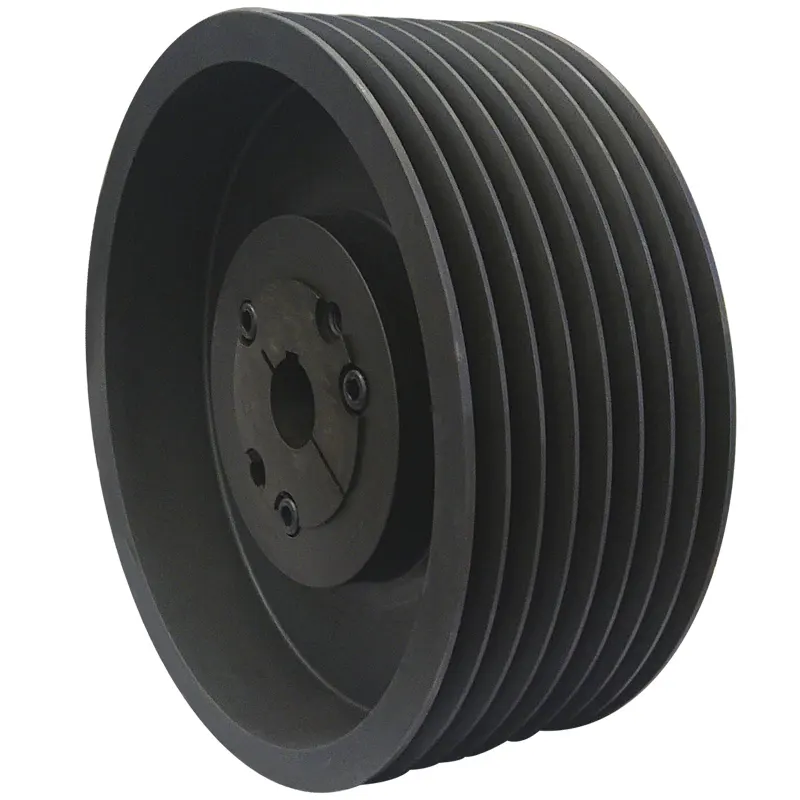
Can V pulleys withstand variations in environmental conditions?
V pulleys are designed to withstand variations in environmental conditions to a certain extent. However, their ability to withstand different environmental factors depends on several factors, including the materials used, the specific design of the pulley, and the maintenance practices employed. Here is a detailed explanation:
1. Temperature:
V pulleys can generally withstand a wide range of temperatures. The specific temperature limits depend on the materials used for construction. For example:
- Cast iron and steel pulleys can handle high temperatures and are suitable for applications in industrial environments.
- Aluminum pulleys have a lower temperature limit, and excessive heat can affect their structural integrity.
- Plastic pulleys may have temperature limitations, and exposure to high temperatures can cause deformation or melting.
It’s important to consider the temperature range in which the V pulleys will operate and select materials accordingly.
2. Moisture and Corrosion:
V pulleys can be susceptible to corrosion, particularly if they are made of materials like cast iron or steel. Exposure to moisture, humidity, or corrosive substances in the environment can lead to rust or degradation of the pulley components.
To mitigate corrosion risks, protective measures can be taken, such as:
- Using corrosion-resistant materials like stainless steel or aluminum alloy.
- Applying coatings or finishes like zinc plating, powder coating, or anodizing to provide a barrier against moisture and corrosive agents.
- Regular cleaning and maintenance to remove accumulated dirt, debris, or corrosive substances.
3. Dust and Contaminants:
V pulleys may be exposed to dust, dirt, and other contaminants present in the environment. These particles can accumulate in the pulley grooves, affecting the grip and performance of the V-belt.
To minimize the impact of dust and contaminants:
- Implement proper guarding to prevent the ingress of debris and contaminants.
- Regularly clean the pulleys to remove accumulated dirt and ensure smooth belt operation.
- Consider using pulley covers or seals to provide additional protection against contamination.
4. Shock and Vibration:
V pulleys may be subjected to shock loads or vibrations in certain applications. These dynamic forces can affect the overall performance and integrity of the pulley and the power transmission system.
Design considerations, such as proper balancing, robust construction, and secure hub attachment, can help minimize the impact of shock and vibration on the pulleys.
5. UV Exposure:
If V pulleys are used in outdoor applications, they may be exposed to ultraviolet (UV) radiation from sunlight. Prolonged UV exposure can degrade certain materials, particularly plastics, causing them to become brittle or discolored.
If UV exposure is a concern, selecting materials with UV-resistant properties or applying protective coatings can help mitigate the effects of UV radiation.
While V pulleys are designed to withstand variations in environmental conditions, it is essential to consider the specific requirements of the application and select appropriate materials, coatings, and maintenance practices to ensure their long-term performance and durability.
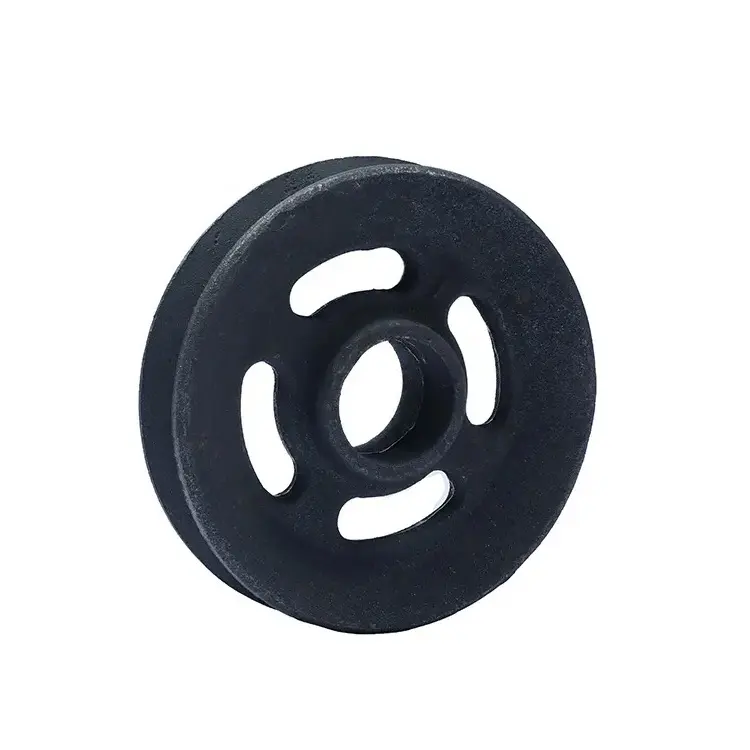
Can V pulleys be used in both simple and complex mechanical systems?
Yes, V pulleys can be used in both simple and complex mechanical systems. Their versatility and effectiveness make them suitable for a wide range of applications. Here’s a detailed explanation:
1. Simple Mechanical Systems:
In simple mechanical systems, V pulleys are often used in basic power transmission setups. These systems typically involve a single driving pulley connected to a driven pulley by a V-belt. The simplicity of the setup allows for easy installation and maintenance.
Simple mechanical systems utilizing V pulleys are commonly found in applications such as:
- Small machinery and equipment
- Home appliances
- Power tools
- Fans and blowers
- Pumps
2. Complex Mechanical Systems:
V pulleys are also employed in complex mechanical systems where multiple pulleys, belts, and components are interconnected. These systems require precise power transmission, synchronization, or speed control.
Complex mechanical systems that utilize V pulleys can be found in various industries, including:
- Automotive: V pulleys are used in engines, transmission systems, and accessory drives.
- Manufacturing: V pulleys are found in conveyor systems, industrial machinery, and production equipment.
- Agriculture: V pulleys are used in tractors, harvesters, and irrigation systems.
- Mining: V pulleys are employed in conveyor belts for material handling.
- Construction: V pulleys are used in construction machinery and equipment.
- HVAC (Heating, Ventilation, and Air Conditioning): V pulleys are utilized in air handling units, fans, and compressors.
3. Advantages in Both Simple and Complex Systems:
V pulleys offer several advantages that make them suitable for both simple and complex mechanical systems:
- Cost-Effective: V pulleys are generally affordable and provide efficient power transmission at a lower cost compared to other drive systems.
- Wide Range of Speed Ratios: By using pulleys of different sizes, V-belt drive systems can achieve a wide range of speed ratios to meet specific application requirements.
- Shock Absorption: The elasticity of V-belts allows them to absorb shock and vibration, reducing stress on the pulleys and other components.
- Quiet Operation: V-belt drive systems produce less noise compared to direct drives, making them suitable for applications where noise reduction is desired.
- Easy Installation and Maintenance: V pulleys are relatively simple to install and maintain, making them accessible for various users and applications.
Overall, the versatility, reliability, and cost-effectiveness of V pulleys make them viable options for both simple and complex mechanical systems, providing efficient power transmission in a wide range of applications.
What are the primary components and design features of a V pulley?
A V pulley, also known as a V-belt pulley or sheave, consists of several primary components and design features that enable its functionality. Here’s an explanation of the primary components and design features of a V pulley:
1. Body:
The body of a V pulley is the main structural component. It is typically made of metal, such as cast iron or steel, to provide strength and durability. The body is designed to support the V-belt and transmit power from the driving source to the driven component. It may have a solid construction or be split into two halves for easy installation or replacement.
2. Groove:
The groove is a key design feature of a V pulley. It is a V-shaped channel or groove that runs along the outer circumference of the pulley. The groove is specifically designed to accommodate the V-belt with a corresponding trapezoidal cross-section. The V shape of the groove enhances the grip between the pulley and the belt, ensuring efficient power transmission and reducing the risk of slippage.
3. Diameter:
The diameter of a V pulley refers to the distance across its outer circumference. It plays a crucial role in determining the speed ratio and torque transmission of the power transmission system. By changing the diameter of the pulley, different speed ratios can be achieved between the driving source and the driven component. Larger pulley diameters generally result in higher belt speeds and lower torque, while smaller diameters lead to slower belt speeds and higher torque.
4. Number of Grooves:
V pulleys can have a single groove or multiple grooves, depending on the specific application. The number of grooves corresponds to the number of V-belts used in the power transmission system. Multiple grooves allow for the simultaneous power transmission to multiple driven components, such as in systems with multiple accessories or pulleys in automotive engines.
5. Tapered or Straight Design:
V pulleys can have a tapered or straight design, depending on the requirements of the application. Tapered pulleys are wider at one end and narrower at the other, allowing for easier belt installation and improved belt tracking. Straight pulleys have a consistent width along their entire circumference and are commonly used in applications where belt tracking is not a significant concern.
6. Surface Finish:
The surface finish of a V pulley is important for optimizing the performance and lifespan of the V-belt. The pulley’s surface should be smooth and free from any roughness or irregularities that could cause excessive belt wear or damage. Proper surface finish ensures proper belt contact, reduces friction, and enhances the overall efficiency of the power transmission system.
7. Mounting Mechanism:
V pulleys are mounted on shafts or bearings using various mounting mechanisms, such as set screws, bolts, or keyways. The mounting mechanism ensures secure and reliable attachment of the pulley to the rotating shaft, allowing for the transmission of rotational motion and torque.
By considering these primary components and design features, engineers can select and design V pulleys that are suitable for specific applications, ensuring efficient power transmission and reliable operation in mechanical systems.


editor by CX
2024-04-03